

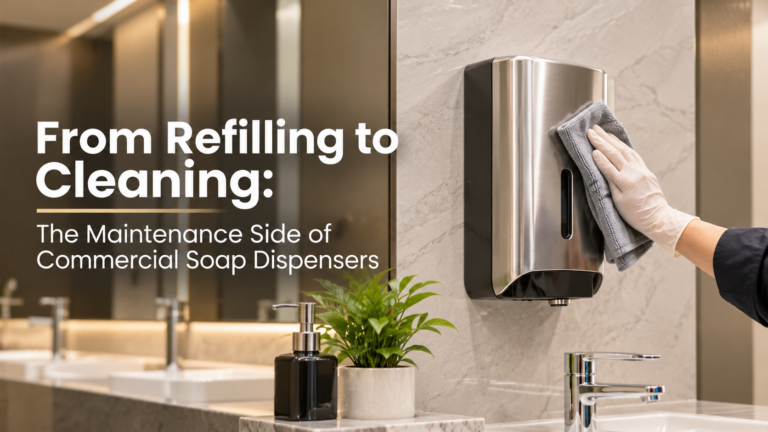
In a commercial washroom, the soap dispenser is often something that is taken for granted. People press on it and wash their hands and dry their hands on the tissue or electric hand dryer and they go about their way. Everything goes well until the dispenser stops working. There could be a few reasons why the dispenser doesn’t work – the soap got over, there is a clogged nozzle or the pump gets stuck. Things like this can instantly make a busy washroom seem unclean. Maintaining the soap dispensers is not a tough task, but whether you have a basic pump or an automatic one, knowing how to take care of it is the key to good health and hygiene.
How Often Should Commercial Soap Dispensers Be Refilled?
You cannot really schedule the maintenance of the dispenser like with AC or plumbing system maintenance. However, you can roughly calculate when it might become empty as per the number of washroom users and the dispenser size. A small office washroom may require a refill every week. It may have to be more frequent, sometimes several times a day for a mall or a busy restaurant.
Only that is that you have to top up before the tank is empty. If a dispenser runs dry, air gets into the pump and it can take several pumps to restart the soap flow.
Checking Soap Levels Before Dispensers Run Empty
Level checks should be a routine part of your maintenance team’s cleaning round. Since the housekeeping team has shifts, you can assign a person for this. Someone to do a quick scan at the end of every shift. It would be easier to calculate if the dispenser has a window because all they have to do is observe the level.
Choosing the Right Soap for the Dispenser System
Soap and dispenser have to be compatible. Foam dispensers require a foaming soap. Liquid soap (not foaming) filled inside a foam unit will become too thick and will eventually clog the unit. Liquid soap (nonfoaming) when used in a liquid unit will become too dilute and wasteful.
Soap with beads or particles in them can also clog the nozzle. Also, the liquid soap should not be too thick.
Why Regular Cleaning Is Important
That dispenser unit must be cleaned regularly even if it “looks” squeaky clean on the outside. Unclean units harbor germs. It is not advisable to top off or refill half-empty dispensers with fresh soap. This can lead to the soap being contaminated with bacteria. So rather than trying to save time, wait until the dispenser is empty. If you need to add soap to the dispenser, empty it completely first and then refill it.
Cleaning the Dispenser Nozzle and Pump
Over time dried soap builds up and narrows the opening. So it is important that the nozzle is cleaned thoroughly before the dispenser is refilled with fresh soap. It is a simple procedure where you turn off the unit first. Then remove the nozzle and rinse it in warm water. Clean and then fix it back. Of course, this is possible when your model allows removal of the nozzle.
Preventing Soap Build-Up and Blockages
The most common culprits causing blockages for the soap dispenser are:
- Dried soap
- Soap that is too thick
- Wrong soap for the dispenser
Wipe the nozzle every day and clean the whole unit at least once a month. And it is important to use the correct soap. Flush with warm water when you change soap types and never mix them.
Checking for Leaks, Drips, and Damaged Components
Another important step in dispenser maintenance is checking for drips and leaks. If there is a leak then it could be because of cracks in the tank or cover. Replace pumps that stick or feel loose. Check for rust on metal parts. Correcting the problem at the right time will ensure longevity of the dispenser.
Keeping Dispensers Ready for Daily Washroom Use
Here are some maintenance tips that would keep your dispensers ready for daily washroom use:
Check the soap level
Keeping the nozzle clean
Test the dispenser once
Check for leaks
- Check the sensor area on automatic units
- Set aside time for deeper cleaning and battery checks
Maintenance Differences Between Manual and Automatic Dispensers
Manual dispensers have no batteries. So the maintenance will be simple and low cost. It is often the pump that goes bad when the users press the pump hard. Also so many people touch the pump so the hygiene factor will be high.
Automatic dispensers are touch-free and hence, more hygienic. But when the batteries run out, you will have to replace them. Also, the sensors have to be clean.
When Should a Commercial Soap Dispenser Be Replaced?
You will have to replace the dispenser if it doesn’t work even after cleaning.
- Cracks or leaks that can’t be repaired
- A pump that keeps failing even after cleaning
- A sensor that doesn’t respond even after fresh batteries.
- Rust or damage to the housing
- Broken locks or brackets
- No spare part availability
How Gulf Ceramics UAE Supports Commercial Washroom Requirements
Gulf Ceramics deals with different kinds of soap dispenser solutions in UAE – wall-mounted, manual and automatic sensor dispensers, liquid soap and sanitiser dispensers. We also provide large commercial units for busy washrooms. We can also help with bulk orders! Not only can you build a full washroom set, but you can also pair dispensers with our hand dryers and paper towel dispensers.
Conclusion
Soap dispenser care is easy – use the correct soap, clean the nozzle, check the battery and sensors and check for wear and tear. While cleaning is mandatory, it is also important to choose a model that matches your traffic for better performance.
